Guide
The 9 AI and search surfaces PulseLogic tracks, and why each one matters
"Showing up in AI search" sounds like one thing. It is at least nine, and a customer might ask any of them. Here is the full map.
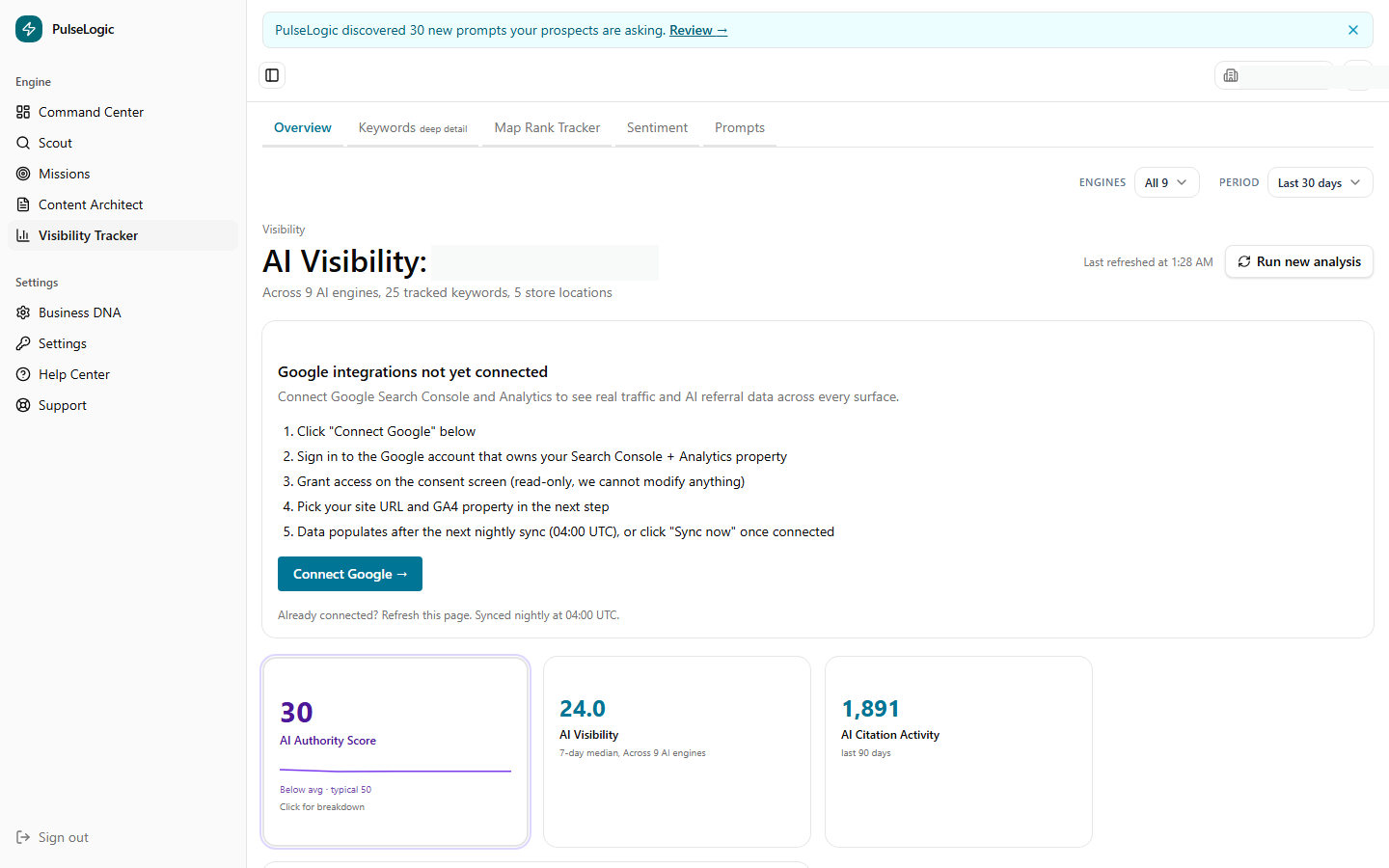
When people say they want to show up in AI search, they usually picture ChatGPT. Fair enough. It is the one everyone knows. But your customers do not all ask the same place. One types a question into Google and reads the AI summary at the top. Another opens Gemini on a phone. A researcher leans on Perplexity because it shows its sources. Each of these builds its answer differently and pulls from different places, so being named in one tells you nothing about the rest. That is why PulseLogic tracks nine surfaces. Here is what each one is, and why it earns a place on your radar.
The Google surfaces
1. Google AI Overview
The AI-generated summary that now sits at the top of many Google results, above the links. For a lot of searches it is the first thing anyone reads, and sometimes the only thing. If the Overview names competitors and not you, you have lost the search before the links even load.
2. Google AI Mode
Google's conversational search, where a person asks follow-up questions and gets a running answer. It rewards sources that hold up across a back-and-forth, not just a clean response to one query.
3. Local Pack
The map and the block of local businesses that appears for "near me" and place-based searches. This is the classic local battleground, and it feeds and overlaps with the AI answers, so it stays central for any business with a physical location.
4. Featured Snippet
The boxed direct answer Google lifts above the links. Winning the snippet means Google chose your wording as the answer, which is a strong signal you are also citable by AI engines.
5. People Also Ask
The expanding list of related questions. It is a map of what else your customers are wondering, and each question is a citation opportunity if you have published a clean answer.
The AI assistants
6. ChatGPT Search
The most-used AI assistant, now answering with live web results. When someone asks it for a recommendation in your category, you want to be one of the names it returns.
7. Gemini
Google's standalone assistant, deeply tied into the Google ecosystem and increasingly the default on Android devices. A different answer-builder from the Google search surfaces, so it is tracked separately.
8. Claude
An assistant that shows up often in considered, research-style questions, the kind people ask while weighing options carefully. Being cited here reaches buyers who are doing their homework before they buy.
9. Perplexity
The answer engine built around citations: it shows its sources prominently. That makes it both a place to be cited and a useful window into which sources the AI ecosystem currently trusts for your topics.
Why nine and not one
Because your visibility is uneven across them, and an average hides the truth. You might be the top citation in Perplexity and invisible in Google's AI Overview, or strong on the Local Pack and absent from ChatGPT. If you only watched one surface, you would either panic over a problem that is isolated or relax over a gap that is costing you customers. Tracking all nine, and weighting them by how prominent each citation is, turns "are we showing up in AI" from a vague worry into a number you can act on.
You cannot improve what you average away. Nine surfaces, tracked separately, is how you see where you are actually losing.
PulseLogic samples these surfaces on a regular cadence. It records where you were named and how prominently, then rolls the results into a single visibility score so you see the trend without losing the detail underneath it. When a surface shows a gap, that gap becomes a writing mission. That is where tracking turns into action.
Book a walkthrough and we will run the full nine-surface check on your business and show you where the gaps are.
Check my AI visibilitySurface coverage reflects PulseLogic as of June 2026 and may expand as the AI search landscape changes.