Resource library
The practical guide to AI visibility and local content.
Deep, answer-first pages built from the same GEO playbook PulseLogic applies to customer content.
Guide
What is generative engine optimization (GEO), and why local businesses can't ignore it
SEO got you into the list of links. GEO gets you into the answer. For a growing share of searches, the answer is all the customer reads.
Read pageGuide
The 9 AI and search surfaces PulseLogic tracks, and why each one matters
"Showing up in AI search" sounds like one thing. It is at least nine, and a customer might ask any of them. Here is the full map.
Read pageGuide
The AIV score: how to measure whether AI engines actually cite your business
"Are we showing up in AI search" is a yes-or-no question with a useless answer. AIV turns it into a number that moves when you do the work.
Read pageGuide
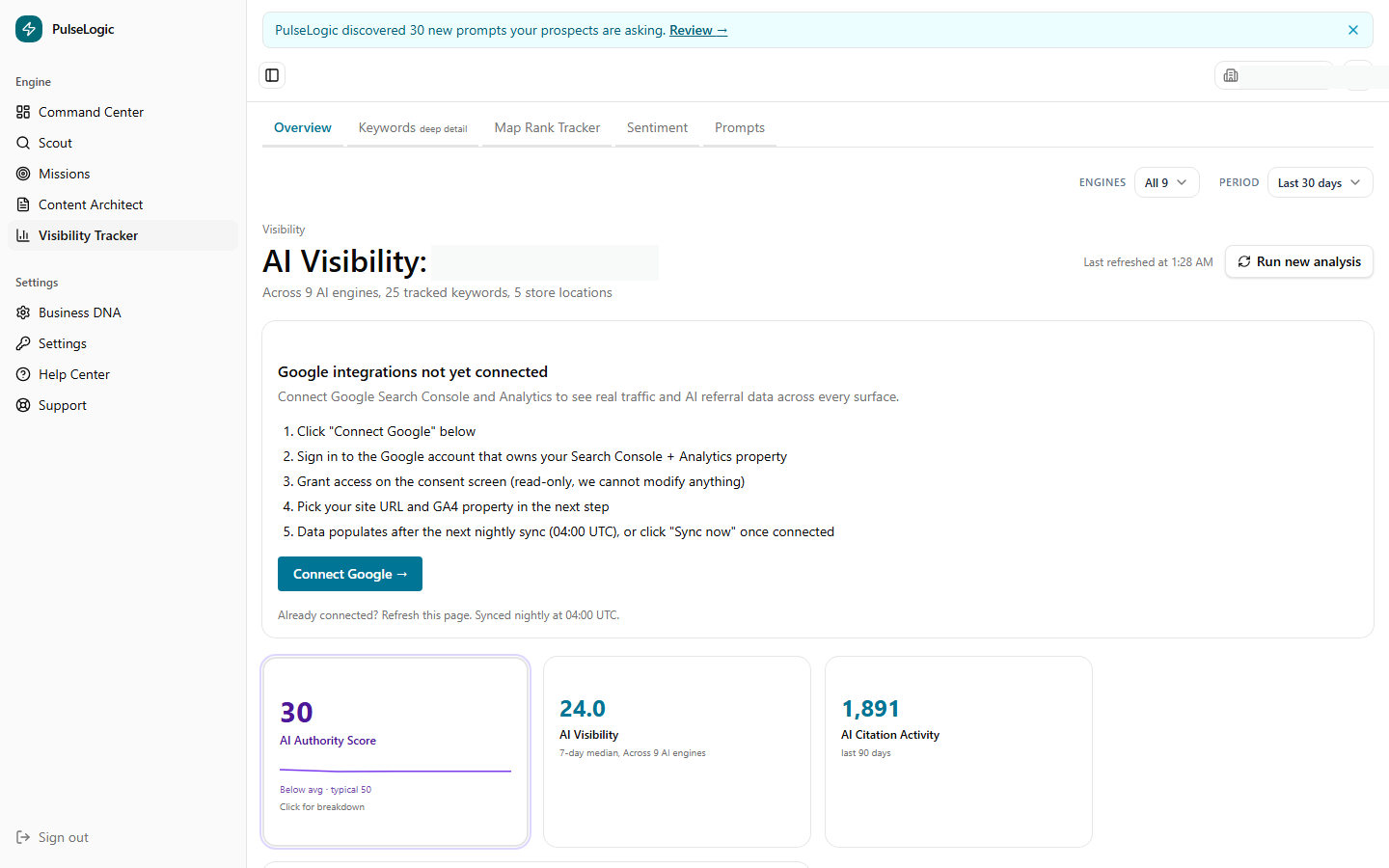
The AI Authority Score: one number for your standing in the AI answer layer
Moz built a category on Domain Authority. The idea was sound: one number for how much the web trusts you. The AI Authority Score is that same idea, moved to where customers now ask their questions.
Read page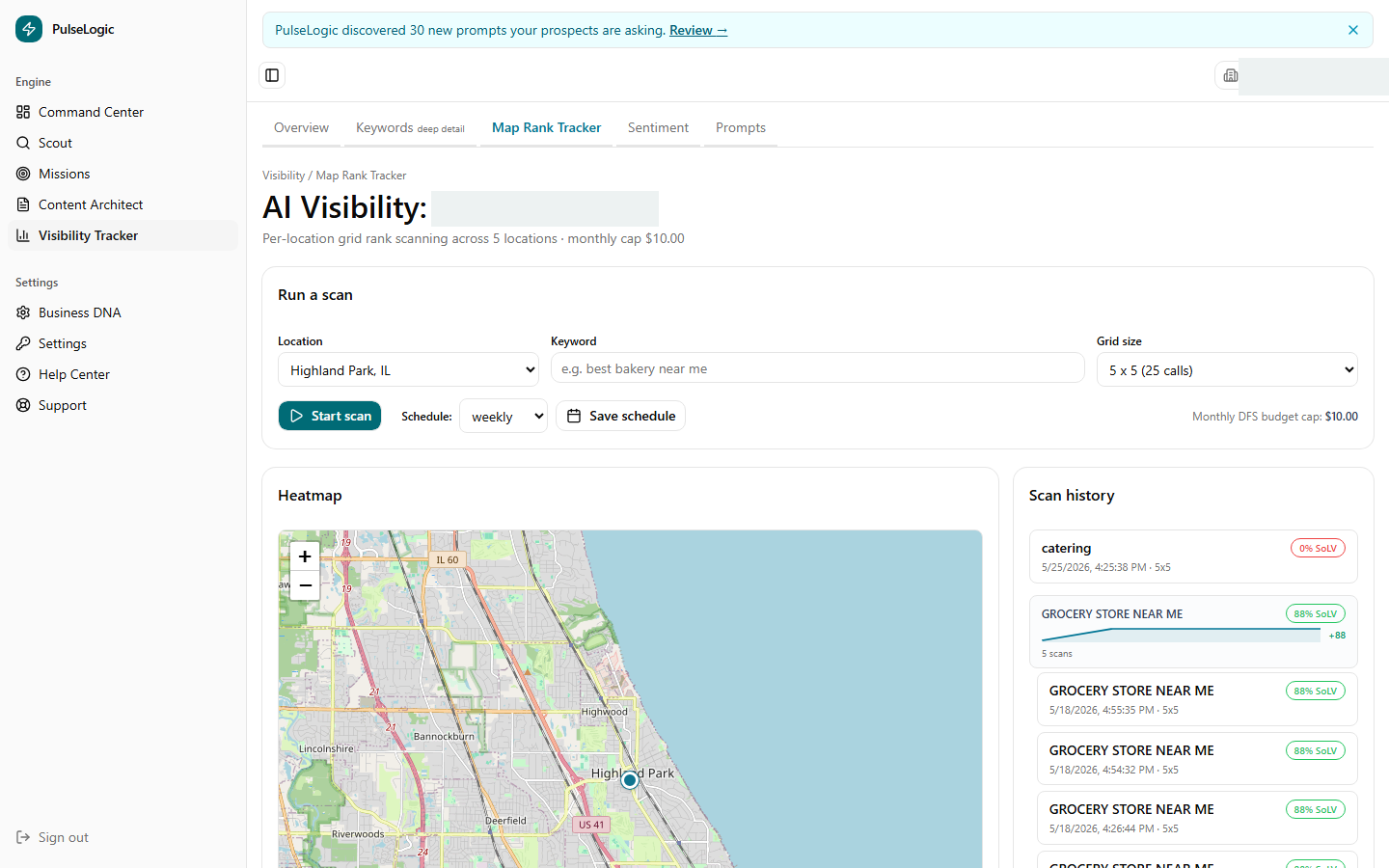
Guide
Per-city AI visibility: track every location in the Map Pack and in AI answers
If you run more than one location, you do not have an AI visibility problem. You have several, and they do not look alike.
Read page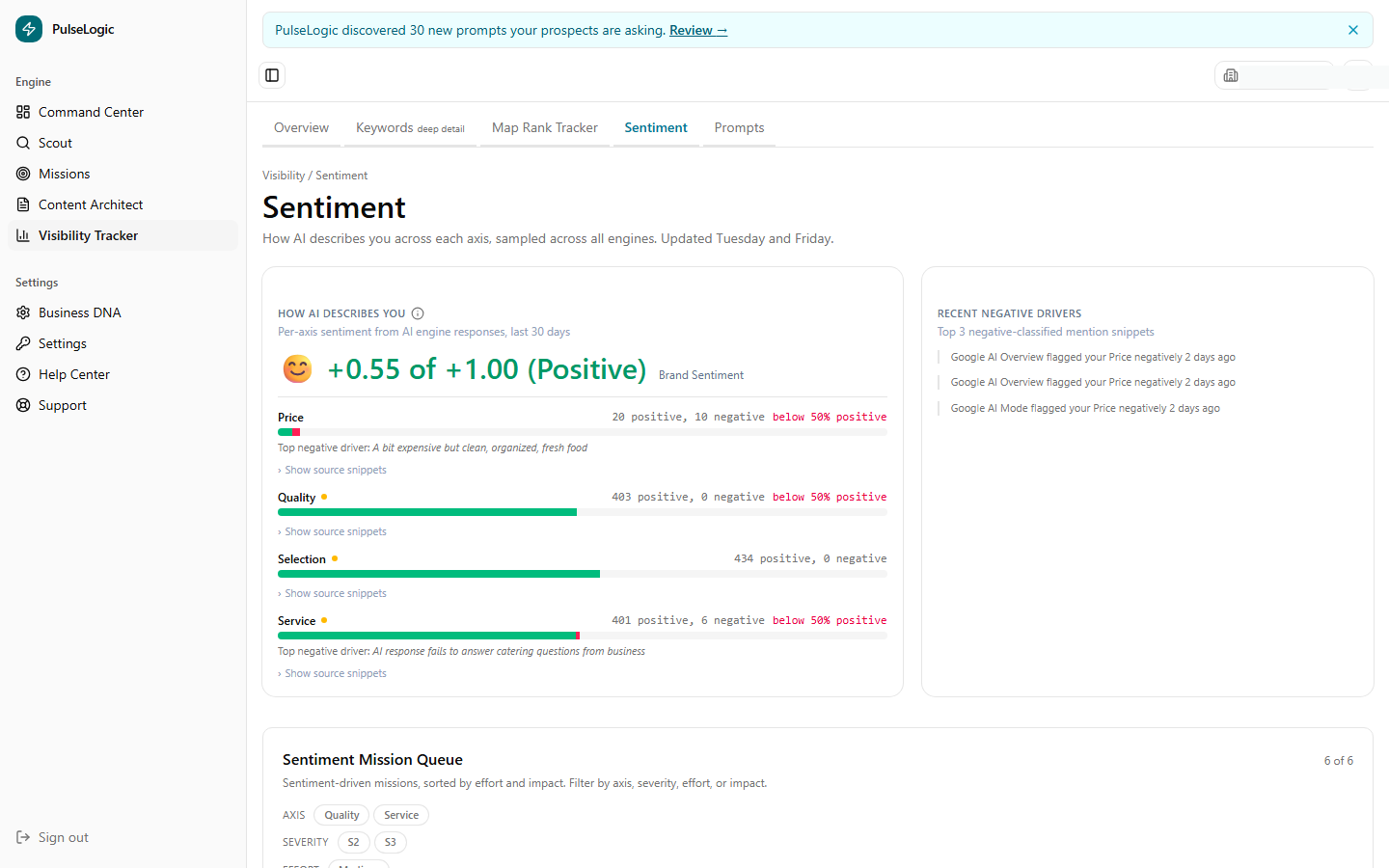
Guide
What AI engines say about your brand: the Sentiment Engine
Being named in an AI answer is good. Being named badly, or wrongly, is a problem you cannot fix if you never see it. The Sentiment Engine is how you see it.
Read page
Guide
AI share of voice: how you compare to competitors in AI answers
Your standing in AI search is not measured in a vacuum. Every answer is a competition, and the only score that matters is how you stack up against the business named right next to you.
Read page
Guide
Citation gaps: finding where AI engines forgot to mention you
Of all the signals in AI search, this is the one with the clearest action attached. A competitor gets cited, you do not, and the fix is obvious. The hard part is finding the gap before your competitor's lead hardens.
Read page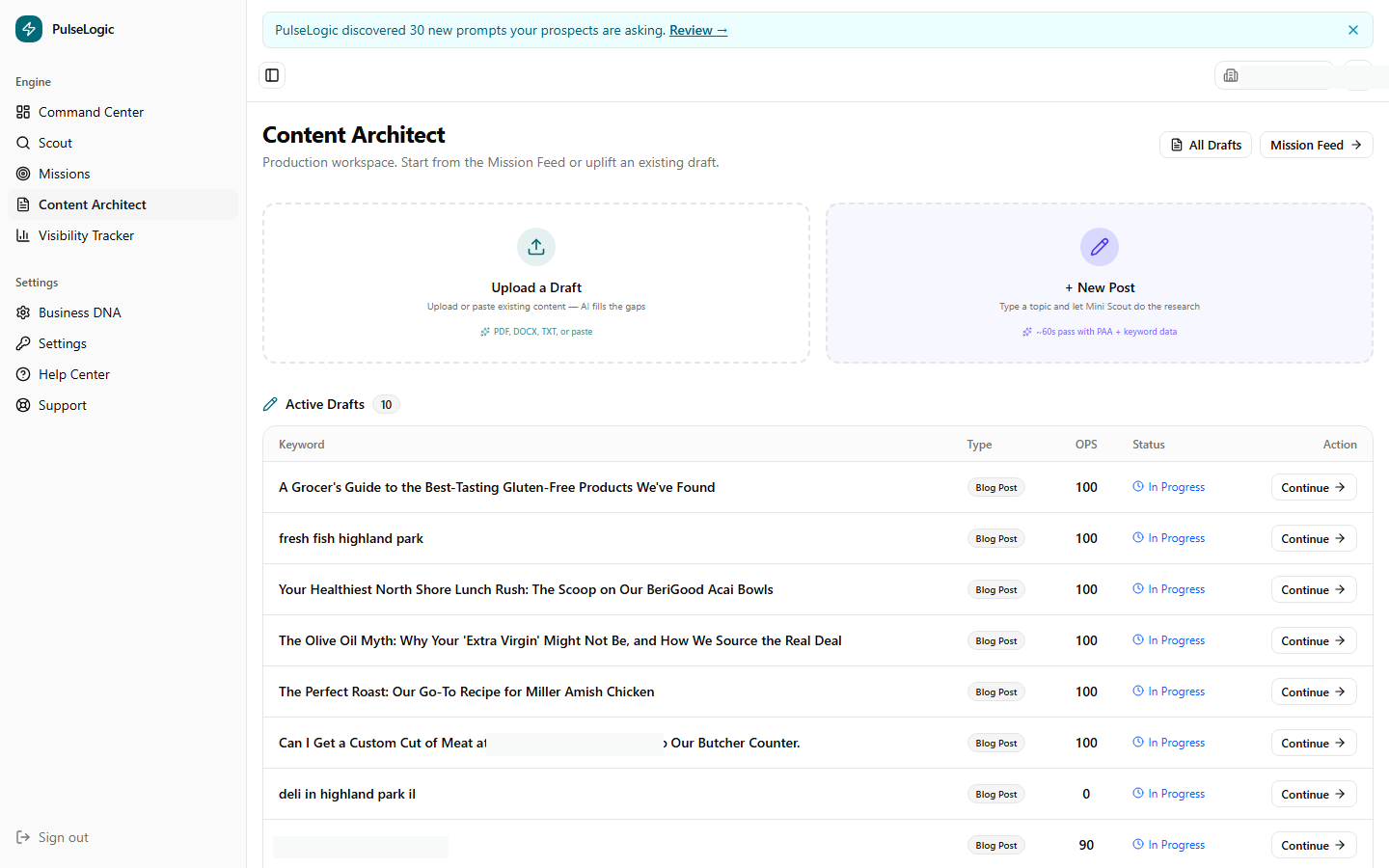
Product tour
Inside the Content Architect: the three-pane AI editor built for real publishing
A chat box is fine for a quick draft. It is a poor place to write something you will actually publish under your name. The Content Architect is built for the second thing.
Read pageProduct tour
Brain dump to finished article: rough notes in, publishable post out
The hardest part of writing was never the knowing. It was the shaping. Brain dump takes the shaping off your plate and leaves the knowing where it belongs, with you.
Read pageProduct tour
Outline first, slash commands, and rewrite a section: how writing in PulseLogic actually flows
One-shot AI writing gives you a finished wall of text you then have to dismantle. Building a post the way good writers do, structure first, prose second, fixes third, is faster and better. Here is the flow.
Read pageProduct tour
Ask the Experts: real quotes from your team, never fabricated
The single most persuasive sentence in any business's content is a real quote from a real person who actually knows the answer. This is the feature that gets that sentence into your posts, honestly.
Read page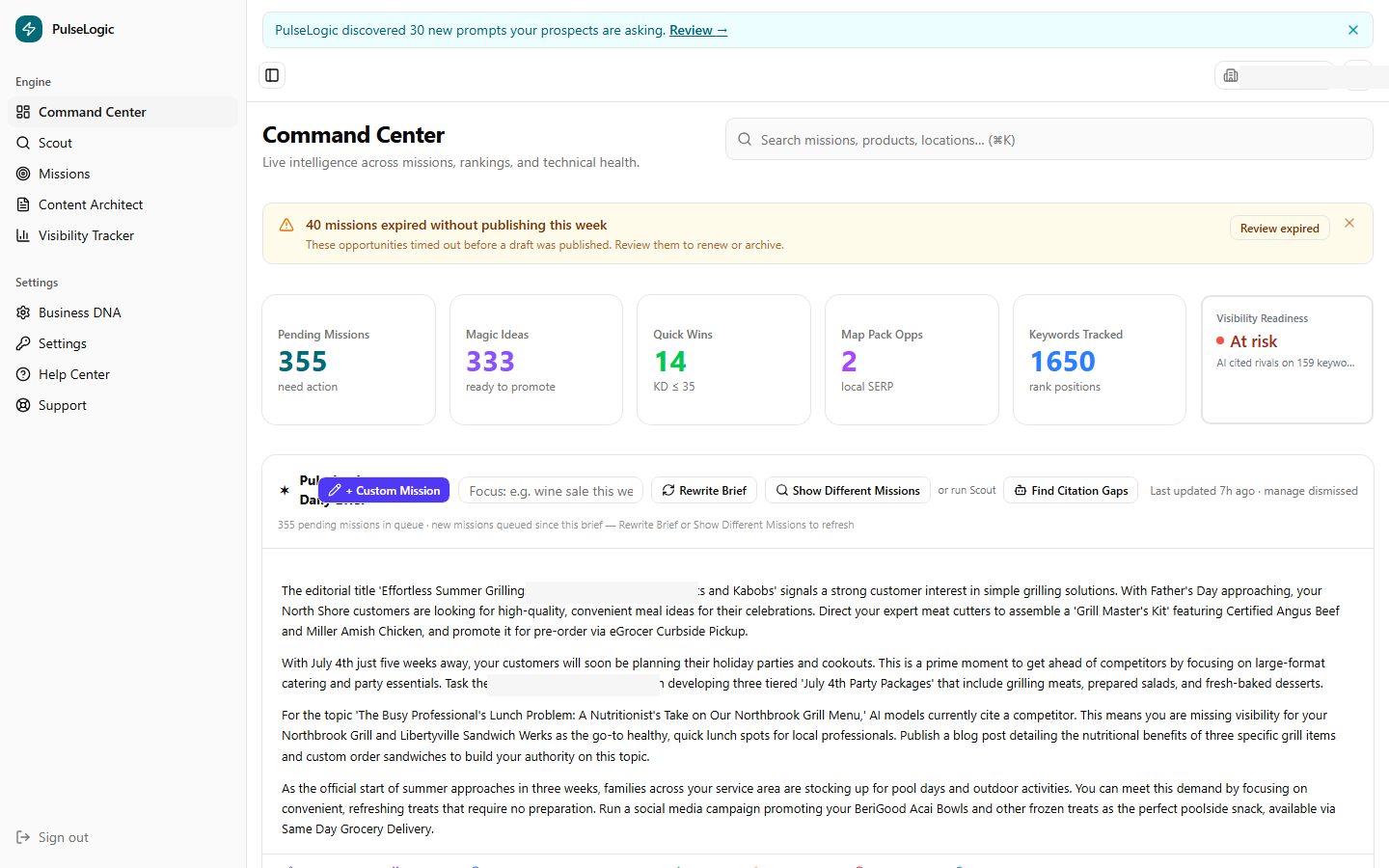
Philosophy
Proactive, not reactive: the AI Daily Brief and Command Center
Almost every marketing tool you own is a filing cabinet that waits to be opened. PulseLogic is the only one that greets you with "here is what I found while you were away."
Read pageProduct tour
Magic Ideas and Scout: where your content opportunities actually come from
"AI suggests topics" is a feature every tool claims. The question that matters is where the suggestions come from and whether they are worth your time. Here is the honest answer.
Read page
Product tour
One blog post, a week of social: the Promote flow and Social Tease board
The post was the hard part. Getting a month of promotion out of it should be the easy part, and for most businesses it never is. Promote fixes that.
Read page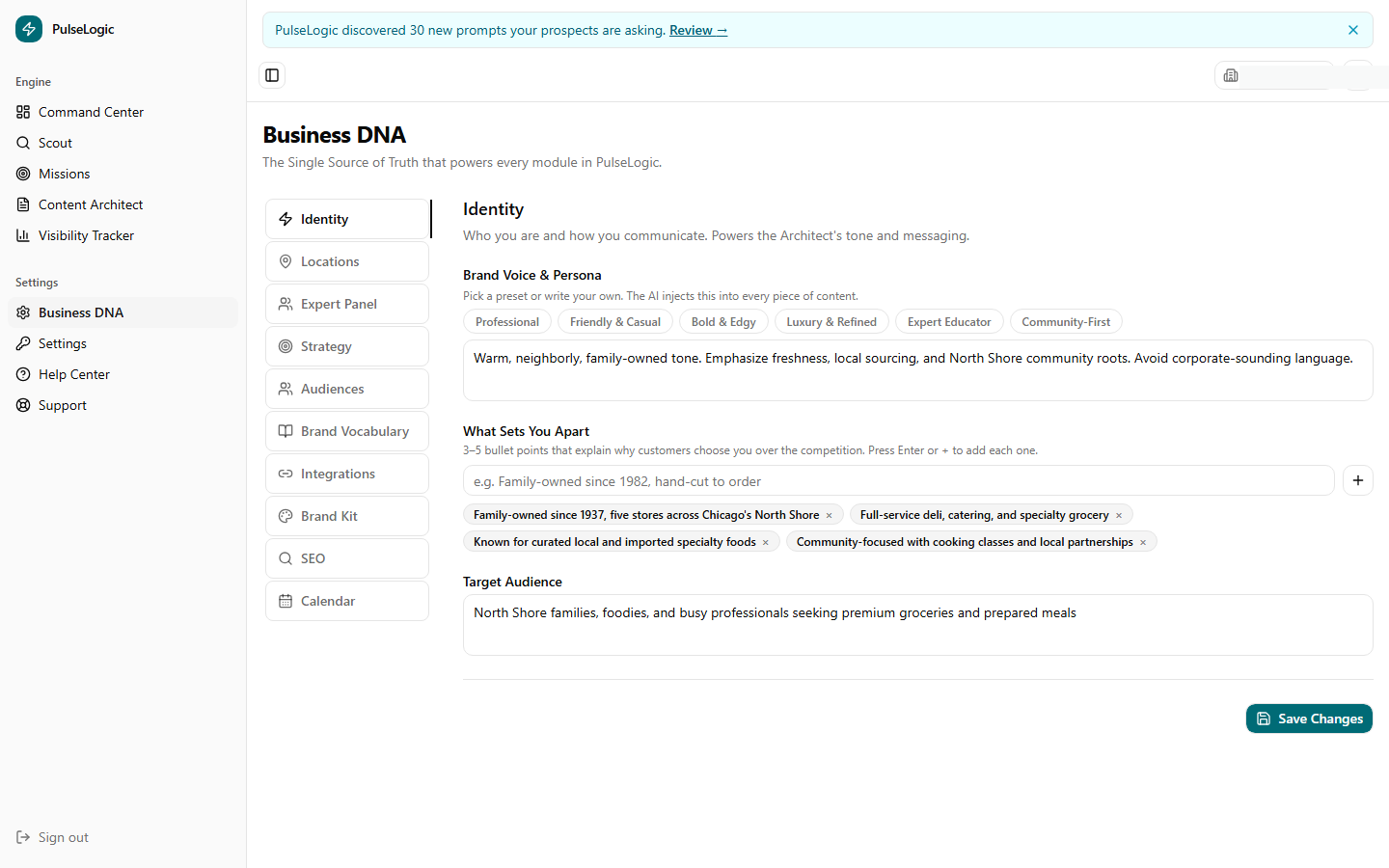
Product tour
Business DNA: teaching the platform who you are
Every good thing PulseLogic does for your content traces back to one place. Get this right and the rest of the platform writes like you. Skip it and you get the generic AI everyone complains about.
Read pageGuide
Validated schema for AI citation, and the GEO Simulator that scores readiness
Two technical steps decide whether your good content actually gets quoted: marking it up so engines can read it, and checking it is citation-ready before it ships. PulseLogic does both, automatically.
Read page